
Emoji 'fastest growing new language'
A 黑料不打烊 professor has teamed up with mobile giant TalkTalk to launch a new national PR campaign to help understand emojis 鈥� the picture based language.
Emoji is being adopted at a faster rate than any other language - that鈥檚 the verdict of a new study which reveals that 8 in 10 Brits (80%) are now using the colourful symbols to communicate.
The 鈥楨moji IQ鈥� study by TalkTalk Mobile is the first piece of in-depth research on UK adoption of the new visual language taking the world by storm.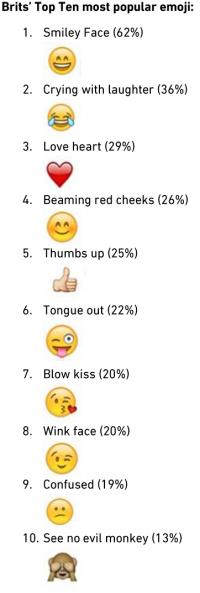
It reveals that emoji has well and truly taken off in the UK, with 62% claiming they are using the new language more than they were a year ago and 4 in 10 claiming to have sent messages made up ENTIRELY of emoji.
Findings reveal that 72% of the younger generation (18-25) now find it easier to express their emotions with the pictorial symbols than words, with over half (51%) believing emoji have improved our ability to interact.
But not everyone is as enthusiastic - 31% of over 40s admitted they avoiding using emoji in text, instant messaging and social media apps like Facebook because they lack confidence in how to use them appropriately. Over half (54%) of those aged over 40 admitted to being confused about what the symbols mean.
The research is supported by an education drive to improve understanding of the picture based language, launched today with 鈥榟uman emoji鈥� taking to the streets of London.
Findings from the study show over a quarter of Brits (29%) are using emoji in at least half of all text, instant messaging and social media communications they send.
The 鈥楽miley Face鈥� emoji proved to be the most popular from a selection of commonly used symbols, with 62% of Brits identifying it as their most used character.
Meanwhile, 鈥楻eception girl鈥�, 鈥楬alleluiah Hands鈥�, 鈥楽hifty Eyes鈥�, 鈥楧ancing Girl鈥� and 鈥楿namused Face鈥� left the most scratching their heads.
TalkTalk Mobile has teamed up with the School of Linguistics and English Language鈥檚 Professor Vyv Evans to explain emoji with an online 鈥楨moji IQ鈥� tutorial. It鈥檚 accompanied by an Emoji IQ test to find out whether you鈥檙e an Emoji Master, Emoji Enthusiast or Emoji Beginner.
Professor Evans comments: 鈥淓moji is the fastest growing form of language in history based on its incredible adoption rate and speed of evolution.
鈥淎s a visual language emoji has already far eclipsed hieroglyphics, its ancient Egyptian precursor which took centuries to develop.鈥�
TalkTalk鈥檚 Head of Mobile Dan Meader comments: 鈥淭he explosion of social networks and messaging apps on our smartphones means that emoji are fast becoming the most popular way to quickly express how we鈥檙e feeling. With a little creativity there is no limit to what we can express with emoji.鈥�
Professor Evans comments further: 鈥淕iven the utility and added value provided by emoji, their usage is expected to increase exponentially across all age and cultural groups. While the uptake will differ by specific type of communication and function, it is not inconceivable that the majority of digital communication will feature emoji in future.
鈥淯nlike natural languages such as English, Emoji is almost universally recognisable because it exploits the visual representation system. Emoji won鈥檛 replace traditional languages but it will increasingly be used to enhance them.
鈥淚 think it鈥檚 conceivable that emoji will increasingly be used to complement digital versions of written works. For instance, the inclusion of emoji to help convey meaning in abridged versions of Shakespeare could help bring those great stories to life for a whole new generation.鈥�
Publication date: 19 May 2015