
Lessons from the Beeching cuts in reviving Britain's railways
 This article by , Dean of Arts and Humanities and Senior Lecturer in Modern History, at the School of History & Archaeology was originally published on . Read the .
More than 50 years ago the Beeching Report , spelling the end of hundreds of miles of British railway lines and stations. Pretty much immediately, local campaigns sprang up to protest what became infamously known as the 鈥�鈥�. Now, the transport secretary Chris Grayling that some of the lines could be re-opened.
The proposals, aimed to 鈥渞everse decades of decline鈥� in the railways, the 鈥渞ebirth of the railways鈥�. Yet huge investment is needed to truly revitalise the railways. Now, as in Beeching鈥檚 time, Britain鈥檚 railways are in need of updating. And if we want to see a rail system that is both economically viable and socially beneficial there are some lessons to be learned from the wrongs of past policy.
Back in 1963, Dr Richard Beeching鈥檚 plans to cut 5,000 miles of line and some 300 stations were outlined in a British Railways Board report, . From an economic perspective, the urgent need to identify savings in the railways was hard to challenge. Nationalised in 1948, the railways had struggled to pay their way for most of the following decade and had, by the early 1960s, accumulated significant operating deficits.
The railways were then in drastic need of modernisation to its rolling stock. Many of the stations built in the Victorian era had fallen into disrepair. Hit by substantial rises in the cost of coal and steel, a combination of management inertia and lack of a clear government strategy hampered attempts to place the railways on a sustainable footing. At a time when rail workers were poorly paid, there was even a reluctance to raise rail fares to offset operating losses.
Consequently, modernisation was slow to materialise and Britain鈥檚 railways still largely ran on steam. Despite the more efficient opportunities afforded by diesel locomotion and electrification, British Railways still purchased steam engines well into the 1950s.
Beeching鈥檚 remit in 1961 was to lead to railways back into profitability by the end of the decade. With Britain鈥檚 economic fortunes on the wane by the early 1960s, the time was ripe for a thorough rationalisation of Britain鈥檚 most prominent nationalised industry.
Economic vs social cost
The clinical and ruthless assessment of what was required to put the railways back on stable footing won many admirers in the then Conservative government. It embraced Beeching鈥檚 proposals and was quick to implement his report鈥檚 recommendations. Few alternatives were offered. When Labour returned to power in 1964, it did little to reverse the cuts 鈥� although Beeching was removed as chairman of British Railways in 1965. The reality was that 鈥� for both the main parties at the time 鈥� the vision of modernisation was framed around a transport system dominated by roads.
As prime minister at the time, Harold Macmillan confided in his in 1963: 鈥淚n ten years we have gone from 2m to 6m motor cars. In another ten years we may go to 12 and eventually 18m cars.鈥� The opening of the new M1 motorway in 1959 鈥� eventually connecting the city of Leeds in the north of England to London in the south 鈥� had already provided an iconic symbol of a new vision that was to be pursued vigorously in the decades that followed.
The main opposition to Beeching鈥檚 proposals focused on the social impact of the proposed cuts. Opponents argued that Beeching had paid scant attention to the social importance of the railways. Many argued that the closure of many lines in rural Britain would isolate communities.
In regions of Britain such as rural north Wales 鈥� where tourism was widely viewed as an alternative to the fast-declining extractive industries and where depopulation was a significant social, cultural and economic problem 鈥� opposition to Beeching was voiced across the political spectrum. As a local Labour MP , the railways were 鈥渁 form of social service, which is as essential as the supply of electricity, gas, water and the NHS鈥�.
Beeching did recognise these concerns, but it was outside his remit to find a solution to the social issue. Although local campaigns slowed down the rate of closures, the vast majority of the report鈥檚 recommendations were enacted. Across Wales, of the 1,500 miles of line in operation in 1951, only 670 miles remained in 1965. By 1975, the figure had fallen to less than 500.
The Beeching legacy
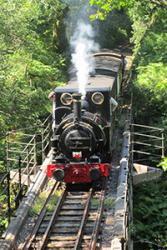 Wales' steam trains have become popular tourist attractions.Since the closures, more than 50 lines have already reopened. In parts of the UK, many former lines were resurrected as part of the new 鈥溾�� sector, while many successful community rail partnerships have also flourished. Elsewhere, disused lines have become popular cycle and walking tracks.
The former line from 黑料不打烊 to Caernarfon along the North Wales coastline encapsulates the Beeching legacy. A significant proportion of the former line is now a popular cycle track, the site of the former station in Caernarfon now hosts a supermarket, while the line south of Caernarfon has been developed as part of hugely successful Welsh Highland Railway. To reopen that line would, no doubt, stimulate a vigorous debate among local cyclists, environmental campaigners, the local industry and heritage conservationists.
Contrary to the apocalyptic narrative that accompanies any discussion of his infamous 鈥渁xe鈥�, there was life for the railways after Beeching. But the reality was that the majority of Britons did view the roads as a more convenient, economical and practical mode of travel .
Today, with those now roads overcrowded and motoring costs escalating, the railways are once again providing a viable alternative. Rail passenger numbers have risen dramatically . For that reason alone, there is logic in revisiting Beeching.
Regular rail users may well have a different view. Overcrowded trains, idiosyncratic timetabling and frequent delays are just some of the problems that need to be addressed. Moreover, rail fares have in real terms since the recession more than a decade ago. The rise of 3.4% in prices in 2018 will compound that problem. And the problems that faced Beeching back in the early 1960s are still there.
Whether nationalised or in private hands, Britain鈥檚 railways are still in desperate need of investment, modernisation and coordination. Meanwhile, Beeching鈥檚 elusive search for a more efficient railway goes on.
Publication date: 7 December 2017