黑料不打烊

Skip to main content
Home

Information for:

  • Alumni
  • Applicants
  • Parents
  • Cymraeg
My country:

Main Menu

    • Undergraduate
      • A鈥揨 of Courses
      • Subject Areas
      • How to Apply
      • Already Applied
      • Applicant Hub
      • Fees and Finances
      • Scholarship and Bursaries
      • Widening Access
      • Study in Welsh
      • Part-Time Study
      • Degree Apprenticeships
      • Study or Work Abroad
      • Work Experience
      • Student Accommodation
      • Pocket Prospectus
      • Academic Calendar
    • Postgraduate Taught
      • A-Z of Courses
      • Subject Areas
      • How to Apply
      • Fees and Finances
      • Scholarships and Bursaries
      • Executive Education
      • January Start
      • Part-Time Study
      • Short Courses and CPD
      • A-Z of Short Courses and CPD
    • Postgraduate Research
      • A-Z of Courses
      • Subject Areas
      • How to Apply
      • Funding
      • The Doctoral School

    Find a Course

    Open Days

    Postgraduate Event

    Applicant Hub

    Virtual Tour

    Order a Pocket Prospectus

    • Student Life
      • Student Life Home
      • 黑料不打烊 and the Area
      • Social Life and Entertainment
      • Student Accommodation
      • Clubs and Societies
      • Sport
      • Virtual Tour
      • Videos and Vlogs
    • Your Experience at 黑料不打烊
      • Student Support
      • Skills and Employability
      • Study or Work Abroad
      • Fees and Finances
      • Student Ambassadors

    Student Profiles

    Student Videos and Vlogs

    Virtual Tour

    • Choose 黑料不打烊
      • A-Z of Courses
      • International Home
      • Why 黑料不打烊?
      • Location
      • Accommodation
      • Student Support
      • Contact Us
    • Apply
      • Entry Requirements
      • Tuition Fees and Scholarships
      • How to Apply
      • Already Applied
      • Study Abroad (Incoming)
      • Exchanges (Incoming)
      • Worldwide Partners

    May Intake Courses

    Your Country / Region

    黑料不打烊 International College

    Find a Course

    • Research
      • Research Home
      • About Our Research
      • Research in our Academic Schools
      • Research Institutes and Centres
      • Integrated Research and Impact Support (IRIS) Service
      • Energy
      • REF 2021
      • Research News
    • Postgraduate Research Opportunities
      • Postgraduate Research
      • Doctoral Academy
    • Events and Training Opportunities
      • Researcher Development

    Royal Recognition: 2023 Queen's Anniversary Prize

    黑料不打烊 Research In Top 30 For Societal Impact In UK

    • The University
      • About Us
      • Our Mission
      • Strategy 2030
      • Annual Report & Financial Statements
      • Our Location
      • Academic Schools and Colleges
      • Services and Facilities
      • Vice-Chancellor's Office
      • Working with Business
      • Working with the Community
      • Sustainability
      • Health and Wellbeing
      • Contact Us
    • Working for Us
    • University Management and Governance
      • Policies and Procedures
      • Slavery and Human Trafficking Statement
      • Management and Governance
    • University and the Community
      • Pontio
      • Sports Facilities
      • Conference Facilities
      • Places to Eat and Drink
      • Public Events
      • Widening Access
      • Services to Schools
    • Business Services
      • Business Services Home
    • Collaboration Hub
      • Collaboration Hub
    • Conferencing and Business Dining
      • Conferencing Facilities
      • Business Dining
    • Intellectual Property (IP) and Commercialisation
      • Intellectual Property (IP) and Commercialisation
    • News
      • Current News
      • Research News
      • Student News
    • Events
      • Events
    • Announcements
      • Flag Announcements

    140th Anniversary

    Public Lectures

    • Open Days 2025/26
      • Mini Open Day - January 2026
      • Main University Open Days
      • Change / Cancel Booking
    • Prepare For The Open Day
      • Mini Open Day Programme
      • Accommodation Options
      • How to get to the Open Day
      • Open Day Parking
      • Student Support
      • Questions to Ask
      • Undergraduate Subject Areas
      • Welsh-medium Study
      • Food and Drink
      • Frequently Asked Questions
      • Discover 黑料不打烊 and the Area
    • Postgraduate Event
      • Event Information

    Book Mini Open Day - January 2026

    Campus Map

    Virtual Tour

    • Undergraduate
      • A鈥揨 of Courses
      • Subject Areas
      • How to Apply
      • Already Applied
      • Applicant Hub
      • Fees and Finances
      • Scholarship and Bursaries
      • Widening Access
      • Study in Welsh
      • Part-Time Study
      • Degree Apprenticeships
      • Study or Work Abroad
      • Work Experience
      • Student Accommodation
      • Pocket Prospectus
      • Academic Calendar
    • Postgraduate Taught
      • A-Z of Courses
      • Subject Areas
      • How to Apply
      • Fees and Finances
      • Scholarships and Bursaries
      • Executive Education
      • January Start
      • Part-Time Study
      • Short Courses and CPD
      • A-Z of Short Courses and CPD
    • Postgraduate Research
      • A-Z of Courses
      • Subject Areas
      • How to Apply
      • Funding
      • The Doctoral School

    Find a Course

    Open Days

    Postgraduate Event

    Applicant Hub

    Virtual Tour

    Order a Pocket Prospectus

    • Student Life
      • Student Life Home
      • 黑料不打烊 and the Area
      • Social Life and Entertainment
      • Student Accommodation
      • Clubs and Societies
      • Sport
      • Virtual Tour
      • Videos and Vlogs
    • Your Experience at 黑料不打烊
      • Student Support
      • Skills and Employability
      • Study or Work Abroad
      • Fees and Finances
      • Student Ambassadors

    Student Profiles

    Student Videos and Vlogs

    Virtual Tour

    • Choose 黑料不打烊
      • A-Z of Courses
      • International Home
      • Why 黑料不打烊?
      • Location
      • Accommodation
      • Student Support
      • Contact Us
    • Apply
      • Entry Requirements
      • Tuition Fees and Scholarships
      • How to Apply
      • Already Applied
      • Study Abroad (Incoming)
      • Exchanges (Incoming)
      • Worldwide Partners

    May Intake Courses

    Your Country / Region

    黑料不打烊 International College

    Find a Course

    • Research
      • Research Home
      • About Our Research
      • Research in our Academic Schools
      • Research Institutes and Centres
      • Integrated Research and Impact Support (IRIS) Service
      • Energy
      • REF 2021
      • Research News
    • Postgraduate Research Opportunities
      • Postgraduate Research
      • Doctoral Academy
    • Events and Training Opportunities
      • Researcher Development

    Royal Recognition: 2023 Queen's Anniversary Prize

    黑料不打烊 Research In Top 30 For Societal Impact In UK

    • The University
      • About Us
      • Our Mission
      • Strategy 2030
      • Annual Report & Financial Statements
      • Our Location
      • Academic Schools and Colleges
      • Services and Facilities
      • Vice-Chancellor's Office
      • Working with Business
      • Working with the Community
      • Sustainability
      • Health and Wellbeing
      • Contact Us
    • Working for Us
    • University Management and Governance
      • Policies and Procedures
      • Slavery and Human Trafficking Statement
      • Management and Governance
    • University and the Community
      • Pontio
      • Sports Facilities
      • Conference Facilities
      • Places to Eat and Drink
      • Public Events
      • Widening Access
      • Services to Schools
    • Business Services
      • Business Services Home
    • Collaboration Hub
      • Collaboration Hub
    • Conferencing and Business Dining
      • Conferencing Facilities
      • Business Dining
    • Intellectual Property (IP) and Commercialisation
      • Intellectual Property (IP) and Commercialisation
    • News
      • Current News
      • Research News
      • Student News
    • Events
      • Events
    • Announcements
      • Flag Announcements

    140th Anniversary

    Public Lectures

    • Open Days 2025/26
      • Mini Open Day - January 2026
      • Main University Open Days
      • Change / Cancel Booking
    • Prepare For The Open Day
      • Mini Open Day Programme
      • Accommodation Options
      • How to get to the Open Day
      • Open Day Parking
      • Student Support
      • Questions to Ask
      • Undergraduate Subject Areas
      • Welsh-medium Study
      • Food and Drink
      • Frequently Asked Questions
      • Discover 黑料不打烊 and the Area
    • Postgraduate Event
      • Event Information

    Book Mini Open Day - January 2026

    Campus Map

    Virtual Tour

Information for:

  • Alumni
  • Applicants
  • Parents
My country:

Search

Close

Breadcrumb

  • Cymraeg

Share this page:

The ATM at 50: how a hole in the wall changed the world

This article by , Professor of Business History and Bank Management,  was originally published on . Read the .

Next time you withdraw money from a hole in the wall, consider singing a rendition of happy birthday. For on June 27, the Automated Teller Machine (or ATM) celebrates its half century. Fifty years ago, the first cash machine was put to work at the in London. Two days later, a Swedish device known as the Bankomat was . And a couple of weeks after that, another one built by Chubb and Smith Industries was inaugurated in London by .
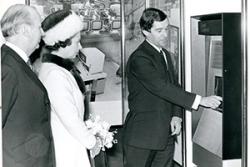
Queen Elizabeth II gets a tutorial. : Lloyds Banking Group Archives , Author providedQueen Elizabeth II gets a tutorial. : Lloyds Banking Group Archives , Author providedThese events fired the starting gun for today鈥檚 self-service banking culture 鈥 long before the widespread acceptance of debit and credit cards. The success of the cash machine enabled people to make impromptu purchases, spend more money on weekend and evening leisure, and demand banking services when and where they wanted them. The infrastructure, systems and knowledge they spawned also enabled bankers to offer their customers point of sale terminals, and telephone and internet banking.

There was substantial media attention when these . Banks promised their customers that the cash machine would liberate them from the shackles of business hours and banking at a single branch. But customers had to learn how to use 鈥 and remember 鈥 a , perform a self-service transaction and trust a machine with their money.

People take these things for granted today, but when cash machines first appeared many had never before been in contact with advanced electronics.

And the system was far from perfect. Despite widespread demand, only bank customers considered to have 鈥渂etter credit鈥 were offered the service. The early machines were also clunky, heavy (and dangerous) to move, insecure, unreliable, and seldom .

Indeed, unlike today鈥檚 machines, the first ATMs could do only one thing: dispense a fixed amount of cash when activated by a paper token or bespoke plastic card issued to customers at retail branches during business hours. Once used, tokens would be stored by the machine so that branch staff could retrieve them and debit the appropriate accounts. The plastic cards, meanwhile, would have to be sent back to the customer by post. Needless to say, it took banks and technology companies years to agree common standards and finally deliver on their promise of 24/7 access to cash.

The globalisation effect

Estimates by concur with my research, suggesting that by 1970, there were still fewer than 1,500 of the machines around the world, concentrated in Europe, North America and Japan. But there were 40,000 by 1980 and a million by 2000.
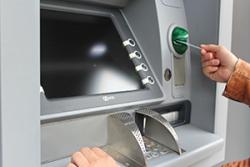
Ready cash? You can bank on it.Ready cash? You can bank on it.A number of factors made this . First, sharing locations created more transaction volume at individual ATMs. This gave incentives for small and medium-sized financial institutions to invest in this technology. At one point, for instance, there were some and .

They also became more popular once banks digitised their records, allowing the machines to perform a host of other tasks, such as bank transfers, balance requests and bill payments. , a huge number of people have made the shift away from the cash economy and into the banking system. Consequently, ATMs became a key way of avoiding congestion at branches.

ATM design began to accommodate people with and problems, too. And in recent decades, many countries have allowed non-bank companies, known as (IAD) to operate machines. The IAD were key to populating non-bank locations such as corner shops, petrol stations and casinos.

Indeed, while a large bank in the UK might own 4,000 devices and one in the US as many as 12,000, , the largest IAD, manages a fleet of 230,000 ATMs in 11 countries.

Bank to the future

The ATM has remained a relevant and convenient self-service channel for the last half century 鈥 and its history is one of invention and re-invention, evolution rather than revolution.

Self-service banking and ATMs continue to evolve. Instead of PIN authentication, some ATMS now use 鈥渢ap and go鈥 using bank cards and mobile phones. Meanwhile, ATMs in and have used , which can identify a customer鈥檚 iris, fingerprint or voice, for some time, while banks in other countries are .

So it鈥檚 a good time to consider what can teach us. The ATM was not the result of a eureka moment of a single middle-aged man in a bath or garage, but from active collaboration between various groups of bankers and engineers to solve the significant challenges of a changing world. It took two decades for the ATM to mature and gain widespread, worldwide acceptance, but today there are 3.5m ATMs with another .

Research I am currently undertaking suggests that ATMs may have reached saturation point in some Western countries. However, research by the suggests there is strong demand for them in China, India and the Middle East. In fact, while in the West people tend to use them for (cash withdrawal, balance enquiries, and purchasing mobile phone airtime), consumers regularly use them for as many as 100 different tasks.

Taken for granted?

Interestingly, people in most urban areas around the world tend to interact with . But they shouldn鈥檛 be taken for granted. In many countries in Africa, Asia and South America, they offer services to millions of people otherwise excluded from the banking sector.

In most developed counties, meanwhile, the retail branch and the ATM are the only two channels over which financial institutions have 100% control. This is important when you need to verify the authenticity of your customer. Banks do not control the make and model of their customers鈥 smart phones, tablets or personal computers, which are vulnerable to hacking and fraud. While ATMs are targeted by thieves, mass cybernetic attacks on them have yet to materialise.

I am often asked whether the advent of a cashless, digital economy . My response is that while the world might and call ATMs something else, the revolution of automated self-service banking that began 50 years ago is here to stay.

Publication date: 26 June 2017

Home

  • News
    • Latest News
    • News Archive
    • Events
Home

Follow Us

黑料不打烊

黑料不打烊, Gwynedd, LL57 2DG, UK

+44 (0)1248 351151

Contact Us

Visit Us

Maps & Directions

Policy

  • Legal Compliance
  • Modern Slavery Act 2015 Statement
  • Accessibility Statement
  • Privacy and Cookies
  • Welsh Language Policy
Map

黑料不打烊 is a Registered Charity: No. 1141565

© 2020 黑料不打烊